From 24 to 28 August 2026, dangerous goods experts will gather in the Palais des Nations in Geneva, Switzerland, for the 48th session of the ADN Safety Committee. During this meeting, experts will discuss the rules for transporting dangerous goods by inland waterways and possible changes to these rules.
The meeting focuses on ADN, the European regulations for the international transport of dangerous goods by inland waterways. The ADN Safety Committee has its origins in the introduction of ADN in 2000. A group of experts was established to keep the regulations up to date, for example when technical developments require changes to the rules.
Today, the committee continues this work by regularly reviewing and discussing the regulations for the safe transport of dangerous goods by inland waterways.
Transporting dangerous goods by inland waterways
Europe has an extensive network of rivers, canals and other inland waterways that are used every day to transport goods. When dangerous goods are transported by inland waterways, specific safety requirements apply to protect people, ships and the environment.
These requirements are included in the European Agreement concerning the International Carriage of Dangerous Goods by Inland Waterways (ADN). In simple terms, this is the European agreement that sets the rules for transporting dangerous goods by inland waterway.
ADN entered into force in 2008 and sets requirements for the international transport of dangerous goods by inland waterways. The current version, ADN 2025-2026, has been in effect since 1 January 2025. Its purpose is to improve safety, prevent environmental pollution caused by accidents or incidents and support the international transport of dangerous goods.
The regulations apply to dangerous goods transported in packages, in bulk or in tank ships. They include requirements for the dangerous goods, packaging, transport, ships, equipment and handling. For organizations involved in these shipments, these requirements help ensure that dangerous goods are transported safely and correctly.
For more information about ADN, see the official UNECE information: European Agreement concerning the International Carriage of Dangerous Goods by Inland Waterways (ADN).
Risks for shippers
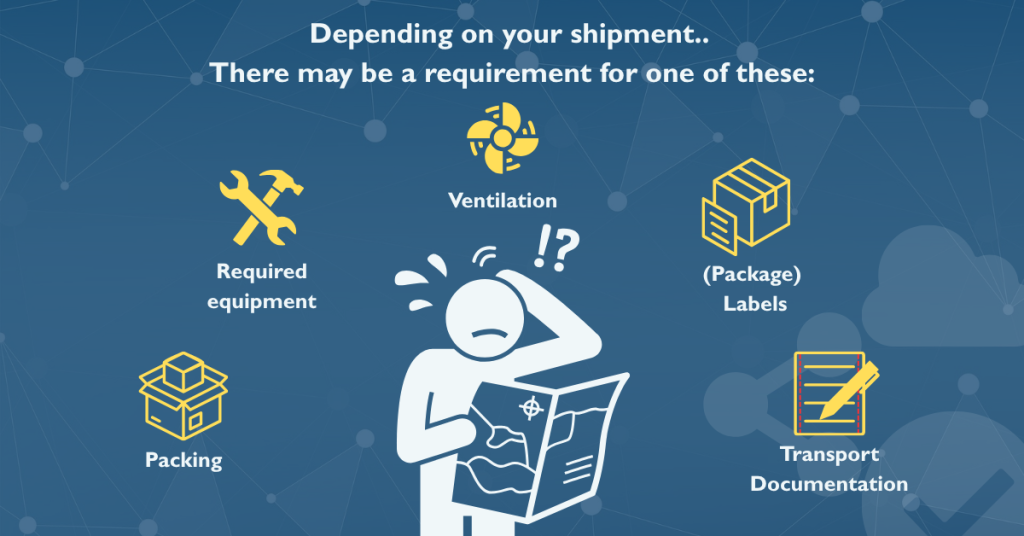
Preparing a dangerous goods shipment involves more than identifying the substance or product being transported. Depending on the dangerous goods and type of shipment, different requirements may apply to packing, required equipment, ventilation, quantities, labels, marks and transport documentation.
Using an incorrect packing instruction, combining dangerous goods that are not allowed to be transported together, or applying the wrong labels and marks can result in a shipment that does not meet the ADN requirements. Missing or incorrect information in the transport documentation can also cause delays and additional work before the goods can continue their journey.
For shippers, it is therefore important to have access to the correct and up-to-date ADN requirements when preparing a shipment. This is especially important for organizations that regularly ship different types of dangerous goods or need to work with large amounts of information.
ADN is updated on a two-year cycle, while amendments and changes are also discussed and prepared between new editions. DGOffice keeps track of these regulatory changes and implements relevant updates in the software, helping users work with up-to-date information when preparing their shipments.
DGOffice Inland Waterways module
DGOffice supports shippers in preparing dangerous goods shipments in compliance with ADN through the Inland Waterways module.
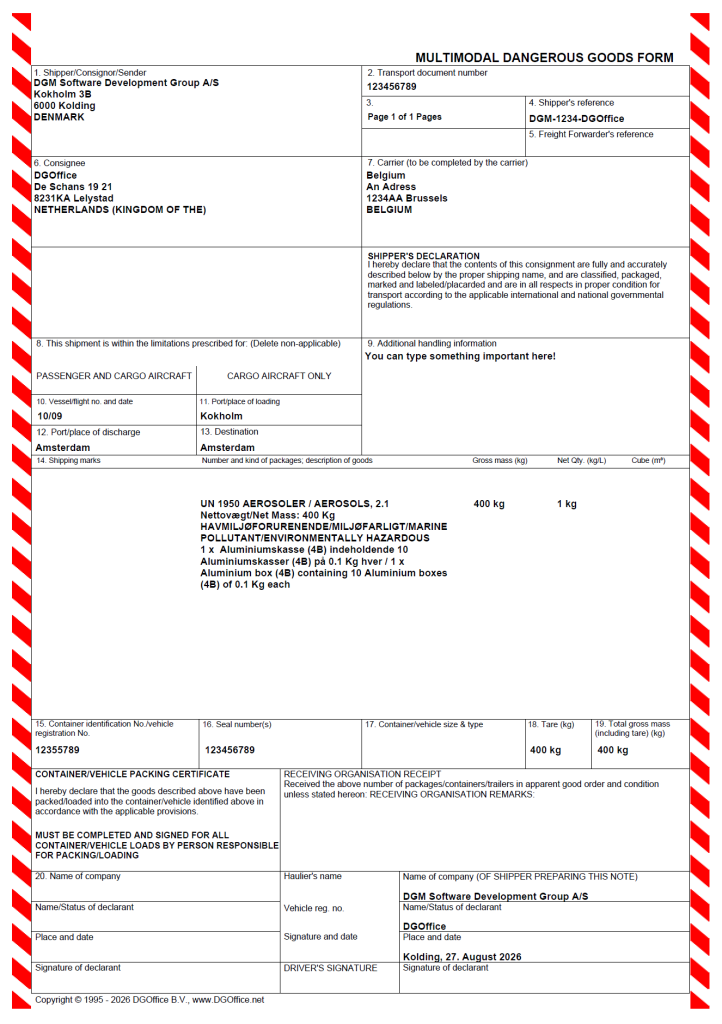
While preparing a shipment, DGOffice provides users with the relevant shipment requirements and a practical ADN checklist. Users can also select the dangerous goods in their shipment and prepare the required Inland Waterways documentation.
The software supports the user during this process by providing the relevant information and built-in checks, such as segregation rules. Shipment details can then be completed and validated before the shipper’s declaration is created.
If your organization transports dangerous goods by inland waterways, DGOffice can help you prepare your shipments safely and in compliance with the European ADN regulation.
See how the DGOffice Inland Waterways module can support your organization and explore all available options on the DGOffice Software Inland Waterways Module page.